
Every year in June, something remarkable happens in Odisha. Farmers put down their tools. Women step away from their kitchens. Young girls are lifted on swings and told — today, you do not work. Today, you rest. And the reason behind all of this is something that most of the world still struggles to say out loud without discomfort.
Menstruation.
The Raja Parba festival is one of the oldest and most misunderstood traditions in India. And once you understand what it really means, you will never see this festival — or the earth beneath your feet — the same way again.
What Is Raja Parba Festival?
Raja Parba is a four-day festival celebrated primarily in Odisha, in eastern India. It happens every year around the 14th or 15th of June, coinciding with a specific moment in the Hindu sidereal calendar called Mithuna Sankranti — the day the Sun moves from Taurus into Gemini.
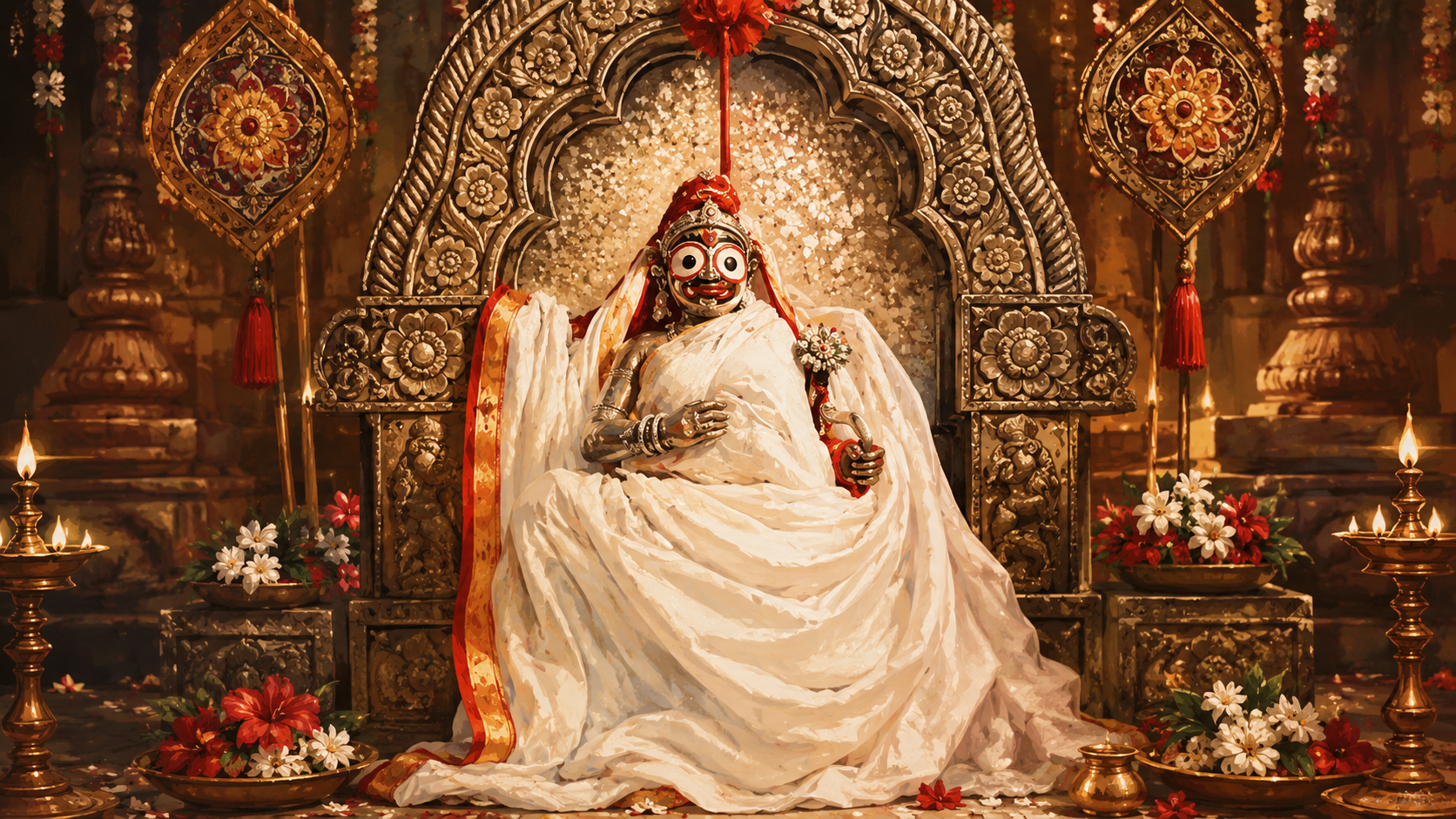
The word Raja comes from the Sanskrit word rajas, which means menstruation. And the festival is built on one central belief: that Bhudevi, the Earth Goddess and consort of Lord Jagannath, undergoes her sacred annual cycle during these three days.
This is not a belief that is hidden or treated as taboo. It is celebrated. Publicly. Joyfully. And with deep reverence.
Why Does the Earth Need to Rest?
Think about what the month of June means for a farming community in eastern India.
The brutal summer has just ended. The soil has been baking under the sun for months. And now, the first monsoon rains are about to arrive — soaking into the dry earth and preparing it for the sowing season ahead.
The Raja Parba festival recognises this moment as the Earth’s own period of rest and renewal. Just as a woman’s body prepares itself through its monthly cycle, the earth is doing the same. And just as you would not disturb someone who is resting and recovering, you do not disturb the earth during these three days.
No farming. No digging. No grinding of spices. No cutting of soil.
The land is left completely alone.
How Is Raja Parba Festival Celebrated?
The festival unfolds across four days, each with its own meaning.
Day One — Sajabaja: The day before the festival begins. Every household cleans thoroughly and grinds all the spices they will need for the next three days — because once the festival starts, no grinding stone will be touched.
Day Two — Pahili Raja: The festival begins before dawn. Women and young girls anoint themselves with turmeric and oil and take a purificatory bath. This is their one bath for the next two days — mirroring traditional customs of menstrual seclusion and rest.
Day Three — Raja Sankranti: The main day of the festival. This is when the Sun enters Gemini and the earth’s cycle is believed to be at its most sacred. The streets fill with music, laughter, and swinging.
Day Four — Basi Raja: The final day of rest. No fire cooking. No farming. Complete stillness for both women and the soil.
On the fifth day — called Basumati Snana — the Earth is ceremonially bathed. Grinding stones, which represent Bhudevi in the home, are washed with turmeric, decorated with vermilion and flowers, and offered fresh fruit. The cycle is complete. The earth is ready. Life can begin again.
The Girls on the Swings
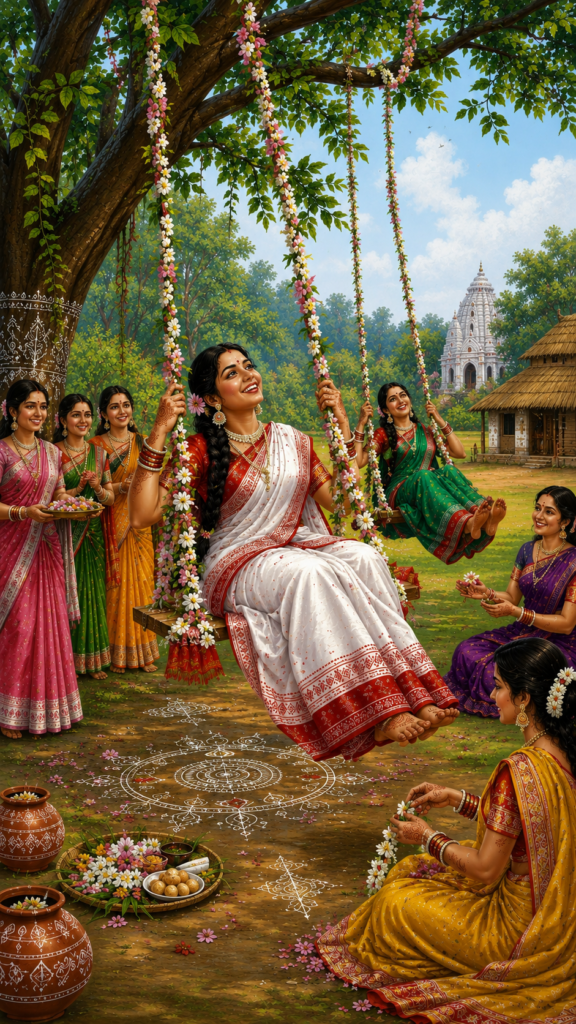
The most beautiful image of the Raja Parba festival is this: young unmarried women, dressed in their finest, soaring through the air on large rope swings called Raja Doli — hung from the branches of ancient banyan, mango, and tamarind trees.
This is not just celebration for the sake of it. It is deeply intentional.
These girls are considered the living embodiment of Bhudevi during the festival. And because the earth is resting beneath their feet, they must not disturb her. So they rise above the ground. They swing. They sing ancient folk songs called Raja Gita — about love, rain, changing seasons, and the passage into womanhood.
The arc of the swing is said to mirror the movement of monsoon clouds. The girls are not just playing. They are becoming the season itself.
What the Draupadi Story Teaches Us
The Odia tradition does not just ask people to observe this rest. It explains what happens when you don’t.
The story of Draupadi in the Mahabharata is read here as a cosmic warning. Draupadi was publicly humiliated while she was in her sacred cycle — dragged into a royal court wearing a single garment. The tradition says this violation was not just a crime against a woman. It was a disruption of the natural order. And that disruption could only resolve itself through the total destruction of the Mahabharata war.
The message is simple and powerful: a society that does not respect the feminine cycle — in a woman’s body or in the earth’s body — does not survive.
Odisha Is Not Alone
The Raja Parba festival is unique to Odisha, but the idea behind it is not.
In Assam, the Kamakhya Temple celebrates the Ambubachi Mela every June — when the goddess’s own cycle is believed to occur. The temple closes for three days. No worship. No farming. On the fourth day, devotees receive a small piece of red cloth as a symbol of divine blessing.
In Kerala, the Chengannur Mahadeva Temple celebrates a festival called Thripputhu when priests notice a red stain on the goddess Parvati’s white vestment. The goddess is moved to a dedicated room, cared for, and then ceremonially bathed in the Pamba River.
Three states. Three traditions. One shared truth.
Why Raja Parba Festival Matters Today
We live in a world that is only now beginning to talk openly about menstruation — and even now, it is often discussed with hesitation or shame.
The Raja Parba festival has been doing the opposite for centuries.
It placed the menstrual cycle at the very center of its calendar. It built its agricultural year around it. It told young women that their bodies were not something to hide — they were something the entire cosmos recognised and respected.
That is not superstition. That is wisdom.
And in a time when we are being forced to rethink our relationship with the earth — with its cycles, its limits, its need for rest — the Raja Parba festival has something important to say to all of us.
Rest is not weakness. The cycle is not an interruption. It is the source.
Written by K. Hari Kumar | Chaturya – The Fourth State For more stories from the intersection of temple lore, Puranic wisdom, and Indian folklore, visit theharikumar.com




Leave a Reply