
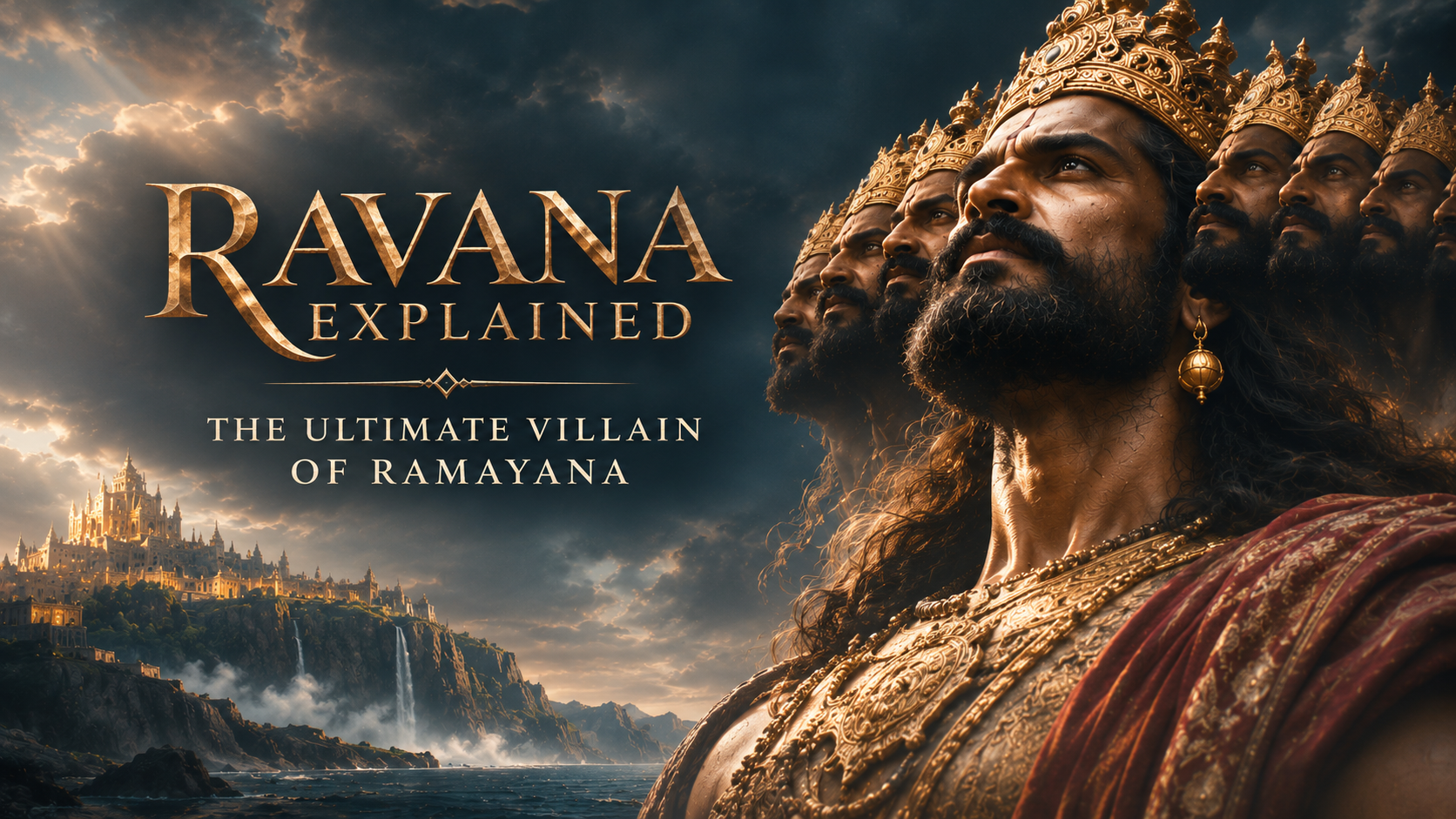
At first glance, the story looks like a familiar battle between light and darkness: Prince Rama sets out across ancient kingdoms to rescue his kidnapped wife, Sita, from Ravana, the ten-headed ruler of Lanka.
In cinema and popular folklore, villains often arrive fully evil. Yet in original ancient texts such as Valmiki’s Ramayana, Ravana is not a simple monster. He was born a high-caste scholar, mastered sacred sciences, played classical music, and possessed spiritual discipline that terrified even the gods.
To understand why this figure has fascinated storytellers for thousands of years, one must examine how an ascetic scholar became an immortal emperor, and how a single blind spot brought him down.
A Tale of Two Bloodlines
Ravana’s origins bring together two opposing forces in Indian cosmology: sacred intellect and primal physical strength.
Through his father, Sage Vishrava, Ravana belonged to the Brahmin class. His lineage reached directly back to Sage Pulasthya and Brahma, the creator god. Vishrava raised the boy under strict discipline. Ravana mastered the four Vedas, ritual systems, statecraft, and the auxiliary sciences known as Vedangas. He grew into a brilliant scholar capable of philosophical debate and intricate composition.
However, his maternal family carried a long-standing grievance.
Ravana’s mother, Kaikeshi, belonged to the Rakshasas, a class of powerful nocturnal beings. Her clan had once established the golden island kingdom of Lanka on Mount Trikuta in the southern ocean. When her ancestors challenged the gods, Vishnu intervened. Defeated, the Rakshasas retreated into Rasatala, an underworld realm deep beneath the earth. Lanka was left empty until Kubera, the god of wealth and Ravana’s older half-brother, occupied the throne.
From Rasatala, Kaikeshi’s father, King Sumali, watched Kubera travel the skies in the Pushpaka Vimana, an aerial chariot moving at the speed of thought. Sumali realized that brute strength alone could not overcome divine weapons. The Rakshasas needed spiritual fire: the discipline and knowledge of a sage.
He sent Kaikeshi to Sage Vishrava’s hermitage to offer herself as a wife. Their sons would inherit both the mind of a Brahmin and the physical power of the Rakshasas, destined to reclaim their lost seat.
The Omen of the Twilight Hour
According to ancient accounts, Kaikeshi arrived at the hermitage during twilight, an inauspicious hour known as Darunavela. In classical tradition, this is the time when fierce spirits wander and evening fire offerings are performed.
Vishrava read her intentions through ascetic insight. He warned her that children conceived at such a fierce hour would take terrifying forms and inherit predatory natures. Kaikeshi stayed anyway.
When their first son was born, they named him Dashagriva, meaning “the ten-necked one”. Tradition interprets his ten heads and twenty arms as symbols of extraordinary intellect and unmatched strength.
Yet Dashagriva grew up in a quiet forest hermitage while his stepbrother Kubera lived in luxury. Spurred by his mother’s sharp rebukes about their diminished status, Dashagriva swore an oath: he would attain insurmountable power and take Lanka by force.
Ten Thousand Years in the Flames
Dashagriva sought power through severe spiritual penance (tapasya).
For ten thousand years, he sat between five fires: four burning around him and the blazing sun overhead. At the close of each thousand-year cycle, he severed one of his heads and cast it into the sacrificial flame.
As he prepared to sacrifice his tenth head, Brahma appeared, moved by the intensity of his austerities. The deity restored his severed heads and granted him a boon.
Dashagriva asked for invincibility against gods, celestial spirits, demons, titans, and serpent races. Brahma granted the protection, along with the ability to change form at will and regrow severed heads instantly.
Yet Dashagriva omitted two groups from his request: animals and mortal humans.
To him, ordinary humans and beasts were far too weak to ever present a danger. That act of pure pride became the fatal flaw in his shield.
Following his penance, he marched on Lanka, drove out Kubera, and claimed the citadel along with the aerial chariot. Uniting the scattered clans under one banner, he assumed the title of supreme king: Ravana.
Devotion vs. Ego
A frequent misconception is that Ravana abandoned his priestly roots after claiming power. In reality, he maintained them.
He remained a dedicated devotee of Shiva, continuing an ancestral connection established generations earlier. He played the Rudra veena, recited chants from the Sama Veda, and maintained sacrificial rituals throughout his rule.
His failing lay not in a lack of learning, but in how he used it.
Traditional sages pursued spiritual discipline to tame the ego and attain liberation (moksha). Ravana walked that disciplined path solely to build personal immunity and power. He treated ritual and knowledge as weapons of conquest rather than tools for self-realization.
When Prince Rama ultimately slew him on the battlefield with the aid of human allies and forest beings, classical accounts like the Skanda Purana record that Rama had to perform rites of atonement for Brahmahatya: the slaying of a Brahmin. Even in his downfall, tradition remembered his heritage.
The Epic Echo
As international audiences watch the Ramayana saga reach screens worldwide, Ravana endures as a compelling figure precisely because he is not an accidental villain. He was an accomplished scholar whose vast potential was undone by absolute pride.
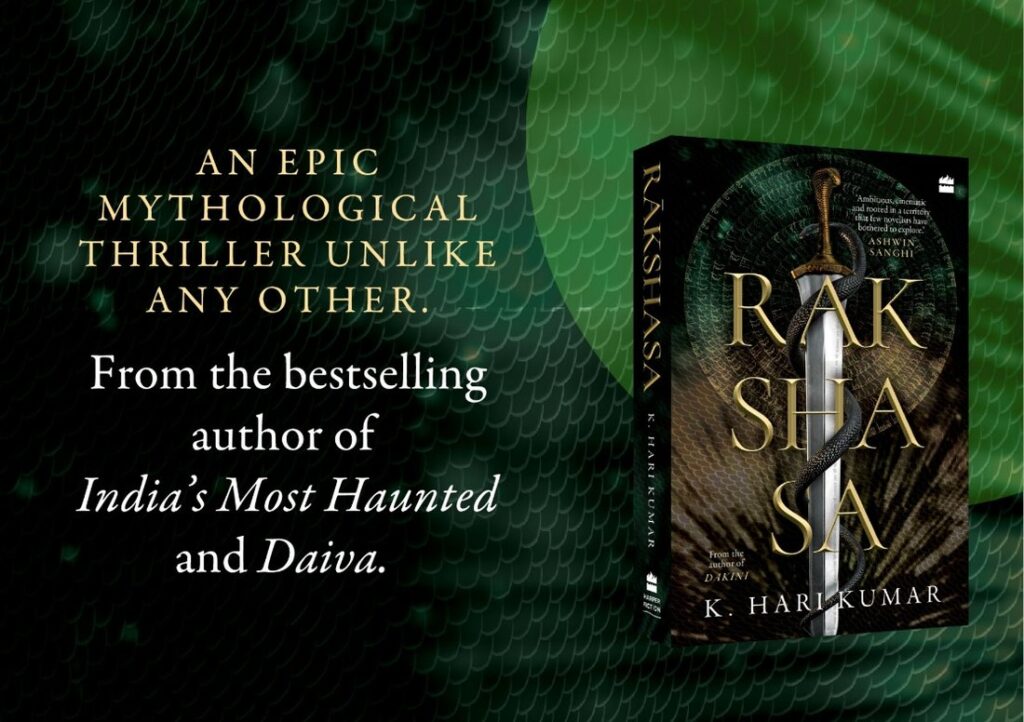
For readers who wish to explore the darker, mythic underworlds of Indian folklore and ancient legends, discover the novel Rakshasa by K. Hari Kumar:
- Paperback Edition: Available on Amazon India
- Kindle Edition: Available on Amazon Kindle


Leave a Reply